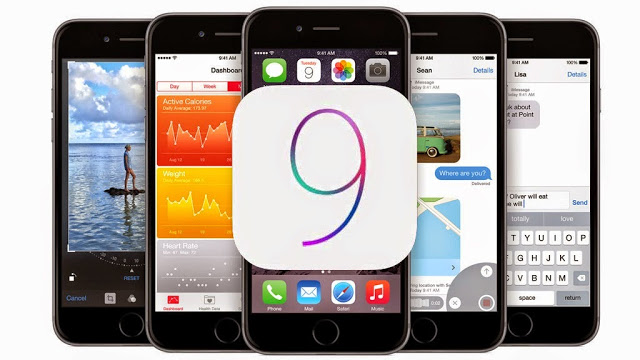
Lost contacts, text messages, photos, videos and other important data on iPhone 6/6 plus, iPhone 5s/5, iPhone 4s and iPad after new iOS 9 upgrade or iOS 9 upgrading failing?
The iOS 9 available on September 16,you can download and install iOS 9 on iPhone iPad iPod Touch on September 16,2015.I believe many ios users want to upgrade their ios devices to ios 9.
Before update your iPhone iPad to iOS 9,you need to backup data at first
To backup all contents from iPhone, iPad to computer or Mac,we recommend you use this iPhone iPad Data Transfer tool,which allows you transfer everything between iPhone,iPad and computer/Mac.What’s more,it can help you transfer data between iPhone and iPad directly,when you buy a new iPhone 6s or new iPad Pro,you can transfer data between old iPhone and new iPhone 6s,or copy data from old iPad to iPad pro
Read this use guide: how to backup data between iPhone,iPad and computer
iOS 9 Update Failed Cause Lost Data on iPhone,iPad
Once losing iPhone data after iOS 9 upgrade,or lost contacts,sms after failed iOS 9 update, If you unfortunately lost data from iPhone after updating to iOS 9 or iOS 9 upgrade failing, today we teach you how to recover data from iPhone after iOS 9 upgrade.
How to Recover SMS,Contacts,Data from iPhone 6/6Plus/5S/5C/5/4S after Updating to iOS 9
iPhone iPad Data Recovery can easily help you recover iPhone 6 /6 Plus,iPhone 5s/5 lost contacts/notes/messages after iOS 9 upgrade or iOS 9 update failing in 3 ways: Recover data directly from iPhone without backup restore data from iTunes backup and retrieve data from iCloud backup. Now, let’s see the details about how to recover iPhone 6 data after iOS 9 update.
Recover Lost iPhone 6/6 Plus Contacts/Notes/Messages after iOS 9 Upgrade
Step 1:Run the iPhone/iPad data recovery and connect iPhone to computer
Run the iOS Data Recovery program on your computer after downloading and installing it. Connect your iPad to the computer, and you’ll get the interface as follow when it’s detected.
Step 2:Choose “Restore from iOS Device” Modes
Then you will see there are two recovery modes appearing on the top: “Recover from iOS Device” and “Recover from iTunes Backup File”. Here, please choose the later one, and you’ll see the window below.
Step 3:Recover iPhone 6 lost data after upgrading to iOS 9
When the scan is finishes, you’ll find all data in the backup file of your iPad are displayed as a list, including contacts, messages, photos, video, notes, and more. Before the recovery, you can preview your data one by one. Choose the items you want and then click “Recover” button to save them on your computer within a click.
Tips: If you failed recover data from iPhone directly,you also can use this powerful iOS Data Recvoery to restore iPhone lost data from iTunes after iOS 9 update,or recover data from iCloud backup files after failed iOS 9 upgrading;Recover iPad iPhone Data After iOS 9 Upgrading.We believe any of the three methods can help you get back lost data from iPhone,iPad after update to iOS 9,when you failed upgrading the iOS devices to the last OS system.
Read more: Recover iPhone lost contacts after update to iOS 9
Recover iPhone lost SMS after iOS 9 update
iOS Data Recovery can help you recover lost data from iPhone, iPad iOS 9/9.3.1/9.3.2/iOS 10,you can recover lost contacts, text messages, photos, videos, call history, notes, WhatsApp data, calendar and more from iPad Pro, iPad Air, iPad mini,the new iPad after iOS 9/iOS 10 upgrade, iOS 9/iOS 10 downgrade, even iOS jailbreak. Besides, you can also recover lost data from iPhone after update to iOS 9 3.2/iOS 10.
Friday, September 11, 2015
iOS 9 Update Failed: Restore Contacts SMS Data from iPhone after Upgrading iOS 9 Failing
Apple Conference released products not only iPhone 6s
Beijing at 1:00 on September 10, we will officially usher in the annual apple autumn new conference. Currently, the news about the conference, the new exposure have been exposed (iPhone 6S and 6S Plus), but the foreign media in time before the conference, but also received some important news, take a look.
Read more:
Recover lost data from iPhone after iOS 9 update failed
Recover iPhone lost photos after failed iOS 9 update
Recover iPhone lost contacts after failed iOS 9 Update Failed
According to the news source said, first of all, iPad Pro minimum capacity of 32GB start, is iPad Air, iPad mini series twice the capacity of the starting price of $ 799 (about 5000 yuan). 64GB, 128GB version priced at $ 899, from $ 999. LTE version of the price more expensive than the Wi-Fi version of the $ 130, which means, 128GB LTE version of iPad Pro, priced as high as $ 1,129 (about 7200 yuan), basic and Retina MacBook almost.
According to previous news, iPad Pro will be equipped A9X processor, the biggest killer is able to run two full-screen iPad application, running iOS 9.1 system, support for 4G + network.
Secondly, in addition to the new 7000 series aluminum alloy, rose gold color, 4K video recording, 12 million pixel camera, based on the technology of 3D Force Touch touch screen, faster A9 processor, 2GB of memory and a faster wireless baseband chip , iPhone 6s, iPhone 6s Plus will support a long-awaited feature: has been in a state of readiness "Hey Siri" voice commands, users without plug power supply can also use the voice commands to wake Siri.
Third, the new Apple TV 4 will run on iOS 9 system "tvOS", this naming and "watchOS", "iOS" identical. It is understood that the operating system continues the existing Apple TV OS, user interface, but it contains a lot of iOS 9, OS X EI Capitan interface elements, such as transparency effects.
Finally, Apple and well-known fashion brands, introduce more models of Apple Watch strap and functions on the morning of the conference, we will see some of the partners. In addition, the new golden Apple Watch Sport will appear for the first time.
Read more:
Recover lost data from iPhone after iOS 9 update failed
Recover iPhone lost photos after failed iOS 9 update
Recover iPhone lost contacts after failed iOS 9 Update Failed
According to the news source said, first of all, iPad Pro minimum capacity of 32GB start, is iPad Air, iPad mini series twice the capacity of the starting price of $ 799 (about 5000 yuan). 64GB, 128GB version priced at $ 899, from $ 999. LTE version of the price more expensive than the Wi-Fi version of the $ 130, which means, 128GB LTE version of iPad Pro, priced as high as $ 1,129 (about 7200 yuan), basic and Retina MacBook almost.
According to previous news, iPad Pro will be equipped A9X processor, the biggest killer is able to run two full-screen iPad application, running iOS 9.1 system, support for 4G + network.
Secondly, in addition to the new 7000 series aluminum alloy, rose gold color, 4K video recording, 12 million pixel camera, based on the technology of 3D Force Touch touch screen, faster A9 processor, 2GB of memory and a faster wireless baseband chip , iPhone 6s, iPhone 6s Plus will support a long-awaited feature: has been in a state of readiness "Hey Siri" voice commands, users without plug power supply can also use the voice commands to wake Siri.
Third, the new Apple TV 4 will run on iOS 9 system "tvOS", this naming and "watchOS", "iOS" identical. It is understood that the operating system continues the existing Apple TV OS, user interface, but it contains a lot of iOS 9, OS X EI Capitan interface elements, such as transparency effects.
Finally, Apple and well-known fashion brands, introduce more models of Apple Watch strap and functions on the morning of the conference, we will see some of the partners. In addition, the new golden Apple Watch Sport will appear for the first time.
Wednesday, July 1, 2015
iOS 9 Update: All The BEST New Features Detailed/iPhone 6s/iPhone 7
iOS 8 is in the bag. Ditto for the iPhone 6 and iPhone 6 Plus. Now we look forward to 2015's iOS 9 and iPhone 7/iPhone 6S
At today's WWDC keynote Apple unveiled a ton of new software features and enhancements for its Macs, Apple Watch, and the brand new Apple Music service. Of course for many the biggest star of the show was iOS 9. As it has done every years since the original iPhone’s debut, a large part of this year’s keynote was dedicated to showing off the major new features of iOS 9. However, this year instead of deciding to pack the next version of iOS with new feature after new feature, the company took the step of focusing on making iOS 9 more stable.
Don’t worry, though. It’s not quite as dull as it sounds, as there are plenty of new features to get excited about. Apple has revamped Siri yet again, made some pretty significant improvements to Apple Maps, added in split screen multitasking to the iPad and released a new keyboard, again, only for the iPad.
“iOS 9 is packed with more intelligence throughout, and delivers big updates to the apps customers use most — Maps supports public transit, a redesigned Notes app provides great new ways to capture ideas, and a beautiful News app delivers content that’s personalised to your interests,” said Craig Federighi, Apple’s senior vice president of Software Engineering. “With our new iPad features, users can take advantage of the power of iPad, working in two apps at the same time with Split View, Slide Over or Picture-in-Picture.”
iOS 9 is now available to download to those inside Apple’s developer program –– but you DO NOT want to install it on your daily driver. The software is in beta and is intended for use by developers only. Regular consumers, especially aboard handsets used as daily drivers, need not apply –– just yet, anyway.
Therefore, it goes without saying: if you’re not a developer, DO NOT download the software, unless, A) you’re using an old iPhone or iPad or B) you’re OK with voiding the warranty of your iPhone or iPad.
Related Tutorial: How to Restore iPhone Data after iOS 9 update
Restore Lost Messages from iPhone after iOS 9 Upgrade
Delete bulk text messages from iPhone 6/5S/5/4S/4 Permanently
Erase everything on iPhone, iPad, iPod permanently
Power management inside the first beta of iOS 9 is woefully bad, apps crash and third party content, in some instances, wouldn’t even load, though this is to be expected inside a developer preview of new software.
Aside from all of these things, though, there are larger initiatives at work in Apple’s ecosystem that will begin to yield some very impressive results in the weeks and months to come. Apple is now far more open to giving developers access to its core APIs, which means more integration between third party applications and core iOS applications, as well as things like Apple Music –– a cross platform service –– and Android Migration assistant to make the switch from Android to iOS all the more easier.
There are a ton of new features, but for now these listed below are, in our opinion, the most significant:
INSANE Improvements To Battery Life
One of the biggest things we’re excited about, however, are the developments Apple is making in its war against poor battery life. The iPhone 6 Plus has an exceptional battery life, so good in fact it is difficult to switch to another phone for very long –– you just miss it too much. However, Apple isn’t done yet –– and the latest development will bring even BIGGER improvements to battery life across the board. It’s called “Low Power” mode and it is likely to be a very big deal.
“Across the entire operating system, apps and key technologies have been made more efficient to trim battery usage wherever possible — so you get more battery life for the things you do every day. Thanks to ambient light and proximity sensors, your iPhone knows if it’s facedown on the table and prevents the screen from turning on, even when you receive a notification. And the new Low Power mode lets you extend your battery life even further,” noted Apple at WWDC 2015.
Transit Maps
Yeah, Apple’s Maps app got off to a horrible start because of a piss poor POI (point of interest) database when the service was unveiled a few years ago. But also another feature Maps lacked was transit directions. Well, no more! In iOS 9 Apple Maps offer a new feature called transit that will show bus, metro, and train directions in the app. Transit will be available in a limited number of cities at first: Baltimore, New York, Berlin, Chicago, London, Mexico City, Philadelphia, Washington DC, Toronto, and dozens in China. From the brief dome onstage it looks like Apple may have gotten Transit right–indeed, it looks much better than the transit directions in Google Maps.
Proactive
A major new feature of iOS 9 is called Proactive. This is a system-wide feature that allows your iOS device to learn your habits and provide recommendations to you based on place, time of day, and activity. How does Proactive work? Well, it’s a lot like Google Now. For example, if Proactive sees you’ve got a meeting at 2pm, it will alert you beforehand and notify you when you have to leave and the best way to get to the meeting based on current traffic conditions. If you like to listen to music at 7am when you work out, Proactive will automatically have your music cued up for you at that time when you plug your headphones in. If you like reading Flipboard at night before you go to bed, Proactive will pull of the Clipboard app automatically at your bedtime.
iPad Split screen Multitasking
A huge new feature of iOS 9 is limited to the iPad–split screen multitasking. In iOS 9 any recent iPad will support multitasking. The way this works is while using an app on the iPad you can swipe left from the side of your screen to pull up a SlideOver window. This window features any app of your choice. For example, if your main app is the Mail app, you can SlideOver the Messages app, which will appear as a column on the side of the screen. When using a SlideOver app only that app is usable. However as soon as your tap the divider, the iPad goes into multitasking mode and allows you to have two usable apps side by side. You can then position two apps on the single screen at the same time and use them both. It’s quite a cool feature and one that is going to make the iPad a much more desktop-like productivity machine.
The best keyboard EVER (iPad only)
My favorite new feature of iOS 9 is also one that is limited to the iPad. There’s a new QuickType keyboard that allows you to use the keyboard as a trackpad by placing two fingers on it and moving them around. Doing so will allow you to move the text entry cursor in any app around the screen. For example, in the Notes app you can place two fingers on the keyboard, slide them around, and watch the cursor on the note move around on the screen. This makes adjusting the cursor position on screen infinitely less frustrating than needing to tap its position on the screen to move it as you need to do now.
Picture in Picture (iPad only)
Another big iOS 9 feature (and one related to multitasking) is, again, iPad-only. Now the iPad supports picture-in-picture (PIP). So, if you have a video app you can encapsulate the playing video in its own window and then open up another app (such as Mail) to get some work done. The video will play on the screen floating above the other app. You can move the PIP around the screen to place it wherever you want and you can even adjust the size of the PIP window.
News app
A surprise announcement was the new News app. That’s right, the loathed Newsstand app has been shutter in favor of News. The new News app is kinda like Flipboard, but pretty looking. With it you'll be able to create a custom magazine tailored to your interest with content from major providers like The New York Times, Conde Nast, and more–in addition to smaller websites.
Apple Pay and Wallet
The most exciting news for us UK folk was the announcement of Apple Pay coming to the UK in July (before iOS 9 ships). But beyond that, Apple Pay in iOS 9 is set to get loyalty card support, more retailers, and the Passbook app is renamed Wallet to reflect the fact that Apple wants to kill the traditional physical wallet and replace it with an all-digital one.
Notes, Android Migration, and More
But iOS 9 doesn’t stop there. As usual it’s got a ton of smaller features too. There’s the new Notes app, which allows you to make rich text notes complete with images and smart links. There’s also a new Android Migration assistant to make it easy for Android switchers to migrate over to iPhone. And then there’s better battery life, smaller file sizes for software updates, and improved security to boot. We’ll have more details of iOS 9 as the week goes on, so be sure to check back soon!
Click on over to PAGE 2 for our preemptive feature on 10 Things iOS 9 Needs To Succeed.
At today's WWDC keynote Apple unveiled a ton of new software features and enhancements for its Macs, Apple Watch, and the brand new Apple Music service. Of course for many the biggest star of the show was iOS 9. As it has done every years since the original iPhone’s debut, a large part of this year’s keynote was dedicated to showing off the major new features of iOS 9. However, this year instead of deciding to pack the next version of iOS with new feature after new feature, the company took the step of focusing on making iOS 9 more stable.
Don’t worry, though. It’s not quite as dull as it sounds, as there are plenty of new features to get excited about. Apple has revamped Siri yet again, made some pretty significant improvements to Apple Maps, added in split screen multitasking to the iPad and released a new keyboard, again, only for the iPad.
“iOS 9 is packed with more intelligence throughout, and delivers big updates to the apps customers use most — Maps supports public transit, a redesigned Notes app provides great new ways to capture ideas, and a beautiful News app delivers content that’s personalised to your interests,” said Craig Federighi, Apple’s senior vice president of Software Engineering. “With our new iPad features, users can take advantage of the power of iPad, working in two apps at the same time with Split View, Slide Over or Picture-in-Picture.”
iOS 9 is now available to download to those inside Apple’s developer program –– but you DO NOT want to install it on your daily driver. The software is in beta and is intended for use by developers only. Regular consumers, especially aboard handsets used as daily drivers, need not apply –– just yet, anyway.
Therefore, it goes without saying: if you’re not a developer, DO NOT download the software, unless, A) you’re using an old iPhone or iPad or B) you’re OK with voiding the warranty of your iPhone or iPad.
Related Tutorial: How to Restore iPhone Data after iOS 9 update
Restore Lost Messages from iPhone after iOS 9 Upgrade
Delete bulk text messages from iPhone 6/5S/5/4S/4 Permanently
Erase everything on iPhone, iPad, iPod permanently
Power management inside the first beta of iOS 9 is woefully bad, apps crash and third party content, in some instances, wouldn’t even load, though this is to be expected inside a developer preview of new software.
Aside from all of these things, though, there are larger initiatives at work in Apple’s ecosystem that will begin to yield some very impressive results in the weeks and months to come. Apple is now far more open to giving developers access to its core APIs, which means more integration between third party applications and core iOS applications, as well as things like Apple Music –– a cross platform service –– and Android Migration assistant to make the switch from Android to iOS all the more easier.
There are a ton of new features, but for now these listed below are, in our opinion, the most significant:
INSANE Improvements To Battery Life
One of the biggest things we’re excited about, however, are the developments Apple is making in its war against poor battery life. The iPhone 6 Plus has an exceptional battery life, so good in fact it is difficult to switch to another phone for very long –– you just miss it too much. However, Apple isn’t done yet –– and the latest development will bring even BIGGER improvements to battery life across the board. It’s called “Low Power” mode and it is likely to be a very big deal.
“Across the entire operating system, apps and key technologies have been made more efficient to trim battery usage wherever possible — so you get more battery life for the things you do every day. Thanks to ambient light and proximity sensors, your iPhone knows if it’s facedown on the table and prevents the screen from turning on, even when you receive a notification. And the new Low Power mode lets you extend your battery life even further,” noted Apple at WWDC 2015.
Transit Maps
Yeah, Apple’s Maps app got off to a horrible start because of a piss poor POI (point of interest) database when the service was unveiled a few years ago. But also another feature Maps lacked was transit directions. Well, no more! In iOS 9 Apple Maps offer a new feature called transit that will show bus, metro, and train directions in the app. Transit will be available in a limited number of cities at first: Baltimore, New York, Berlin, Chicago, London, Mexico City, Philadelphia, Washington DC, Toronto, and dozens in China. From the brief dome onstage it looks like Apple may have gotten Transit right–indeed, it looks much better than the transit directions in Google Maps.
Proactive
A major new feature of iOS 9 is called Proactive. This is a system-wide feature that allows your iOS device to learn your habits and provide recommendations to you based on place, time of day, and activity. How does Proactive work? Well, it’s a lot like Google Now. For example, if Proactive sees you’ve got a meeting at 2pm, it will alert you beforehand and notify you when you have to leave and the best way to get to the meeting based on current traffic conditions. If you like to listen to music at 7am when you work out, Proactive will automatically have your music cued up for you at that time when you plug your headphones in. If you like reading Flipboard at night before you go to bed, Proactive will pull of the Clipboard app automatically at your bedtime.
iPad Split screen Multitasking
A huge new feature of iOS 9 is limited to the iPad–split screen multitasking. In iOS 9 any recent iPad will support multitasking. The way this works is while using an app on the iPad you can swipe left from the side of your screen to pull up a SlideOver window. This window features any app of your choice. For example, if your main app is the Mail app, you can SlideOver the Messages app, which will appear as a column on the side of the screen. When using a SlideOver app only that app is usable. However as soon as your tap the divider, the iPad goes into multitasking mode and allows you to have two usable apps side by side. You can then position two apps on the single screen at the same time and use them both. It’s quite a cool feature and one that is going to make the iPad a much more desktop-like productivity machine.
The best keyboard EVER (iPad only)
My favorite new feature of iOS 9 is also one that is limited to the iPad. There’s a new QuickType keyboard that allows you to use the keyboard as a trackpad by placing two fingers on it and moving them around. Doing so will allow you to move the text entry cursor in any app around the screen. For example, in the Notes app you can place two fingers on the keyboard, slide them around, and watch the cursor on the note move around on the screen. This makes adjusting the cursor position on screen infinitely less frustrating than needing to tap its position on the screen to move it as you need to do now.
Picture in Picture (iPad only)
Another big iOS 9 feature (and one related to multitasking) is, again, iPad-only. Now the iPad supports picture-in-picture (PIP). So, if you have a video app you can encapsulate the playing video in its own window and then open up another app (such as Mail) to get some work done. The video will play on the screen floating above the other app. You can move the PIP around the screen to place it wherever you want and you can even adjust the size of the PIP window.
News app
A surprise announcement was the new News app. That’s right, the loathed Newsstand app has been shutter in favor of News. The new News app is kinda like Flipboard, but pretty looking. With it you'll be able to create a custom magazine tailored to your interest with content from major providers like The New York Times, Conde Nast, and more–in addition to smaller websites.
Apple Pay and Wallet
The most exciting news for us UK folk was the announcement of Apple Pay coming to the UK in July (before iOS 9 ships). But beyond that, Apple Pay in iOS 9 is set to get loyalty card support, more retailers, and the Passbook app is renamed Wallet to reflect the fact that Apple wants to kill the traditional physical wallet and replace it with an all-digital one.
Notes, Android Migration, and More
But iOS 9 doesn’t stop there. As usual it’s got a ton of smaller features too. There’s the new Notes app, which allows you to make rich text notes complete with images and smart links. There’s also a new Android Migration assistant to make it easy for Android switchers to migrate over to iPhone. And then there’s better battery life, smaller file sizes for software updates, and improved security to boot. We’ll have more details of iOS 9 as the week goes on, so be sure to check back soon!
Click on over to PAGE 2 for our preemptive feature on 10 Things iOS 9 Needs To Succeed.
20 Hidden Features iOS 9 in Your iPhone 6/5s/5
Apple’s iOS 9 is one of the most exciting things it will release in 2015. Maybe it’s not the most exciting, considering that Apple is expected to release a new generation of iPhones, expected to be called the iPhone 6s and the iPhone 6s Plus, but iOS 9 will bring new features to the millions of iPhones already in use around the world.
Apple has revealed many of the major updates that iOS 9 will bring at its recent Worldwide Developers Conference. But each time it introduces a developer release of the operating system, more details about the operating system’s features and functions are revealed. The company just released the second iOS 9 beta, and while the purpose of that release is to fix bugs and improve the user experience, there are still some interesting hidden features to talk about.
As TechnoBuffalo reported, there are plenty of additions to iOS 9 that Apple didn’t discuss at WWDC, as revealed in the first and second beta of the software. As Zach Epstein reports for BGR, the Apple blog MacRumors has created a video showing off some of the hidden features of iOS 9, as revealed by the beta release. As Epstein notes, the software is not supposed to be shown off to the extent it’s demonstrated in the video, as per the terms of Apple’s developer agreement, but the blog found someone with access who was willing to demo the features.
Related Tutorials:
Restore Data from iPhone iPad after iOS 9 Upgrade
Recover Lost Contacts from iPhone after iOS 9 Upgrade
Permanently Erase Data from iPhone Before Selling
Repair Operating System for iPhone iPad iPod
In the video, available on YouTube here, the narrator shows off a number of iOS 9 features that users aren’t expecting, like a hidden iCloud Drive app, a battery widget for the Notification Center, and a number of changes to the operating system’s keyboard. Read on to get the scoop on 20 hidden features of iOS 9 that were revealed by the first two betas of the new operating system.
1. New back button
One of the fairly major changes in iOS 9 will be that the interface will show you links to go back to the previous app. If you’re using an app and click a link that takes you to another app, a link to go back will appear in the upper left-hand corner of your screen.
2. Improved iCloud Drive access
New iCloud Drive app enables you to access the files you have stored in the cloud. The app doesn’t automatically show up on the home screen, but if you’d like it to, you can go into your iPhone’s settings and toggle the setting to make the app visible on the home screen.
3. Mail app improvements
You’ll be able to access and attach files from iCloud Drive directly from the Mail app. (In fact, you’ll be able to add any type of attachment to an email message in iOS 9.) The operating system will also enable you to send more than five photos from the Photo app; in fact, you’ll be able to send as many photos as you’d like. The upgraded Mail app will also enable you to save attachments to iCloud Drive directly by tapping and holding an attached file, and will feature bulk actions like Mark All, Move All, and Trash All.
4. Photos app updates
In the Photos app, you can quickly scroll through photos by opening up an image. From there, you’ll notice a new thumbnail strip. You can slide your finger across it to navigate through the gallery. You’ll also be able to swipe down on a photo to dismiss it and go back to the Albums view. Additionally, you can hide multiple photos by selecting a photo, bringing up the Share Sheet, and selecting the photos you want to hide.
5. Keyboard upgrades
Because the iOS keyboard’s shift function has always been confusing — it’s difficult to know when shift is activated or not — Apple is introducing a simple fix. Now, when you tap shift, all of the letters on the keyboard will change to uppercase, and when shift isn’t activated, they’ll appear in lowercase. (If you don’t like the feature, can always turn off the lowercase keys in the Settings app.) The keyboard gains a separate section for flag emoji. And the edit functions on the iPad keyboard have been tweaked; an undo/ redo option shows up as the default edit function instead of the cut/paste tool. The cutting and pasting functions will pop up once you’ve highlighted text, replacing the undo buttons.
6. Better battery controls
Your ability to manage your iPhone’s battery life will also improve with iOS 9. The operating system will add a “Low Power Mode” that should give you up to an hour of extra battery life. It can be turned on in your iPhone’s settings, where you’ll also be able to see a detailed breakdown of which of your apps have consumed the most battery power. In the Notifications Center, you’ll see a new Battery widget that shows you how much battery capacity is left on both your iPhone and on a paired Apple Watch.
7. Siri updates
Siri is getting some minor improvements, with a design reminiscent of the interface on the Apple Watch. You can also turn on a setting that mutes Siri when you mute your phone. Additionally, when you activate the personal assistant, your phone will vibrate to indicate that she’s ready for a query.
8. Search improvements
iOS’s Search function is much-improved in iOS 9 beta 2, and brings both more results and a wider range of results for each search query. Additionally, in the settings for Search, you’ll see a list of installed apps with the option to toggle them on or off in search results. In the iOS 9 Beta 1, the menu showed only Apple search results and options like Bing Web Results, Documents, Found in Mail, and Safari Suggestions. Tapping on the Search bar in the Maps app reveals new options like Food, Drinks, Travel, and more. And when you look up a contact in Search, you’ll be able to call or message them directly from there.
9. Faster Apple Pay access
In addition to accessing Apple Pay via the new Wallet app, you can also navigate to the mobile payments app from the lock screen by double-clicking the home button. From there you’ll be able to see your wallet, choose a card, and make a payment quickly.
10. New default apps
Find My Friends and Find My iPhone will be default apps, which will be automatically installed on your phone. Find My Friends also gains a Notification Center widget.
11. Better security
iOS 9 will also add more passcode options, and you’ll be able to choose whether you want to use a four-digit numeric code, a custom six-digit numeric code, or a custom alphanumeric code.
12. New video controls
When recording a video, you’ll be able to toggle the flash on and off. (Before, you could only turn the flash on or off before you started to record a video.) The change gives users more flexibility, and will enable you to change whether the flash is on or off as you go, rather than having to decide beforehand. From the settings app, you can also select recording resolutions and frame rates. You’ll be able to shoot 720p at 30fps, 1080p at 30fps, and 1080 at 60fps.
13. Updated Podcasts app
The Podcasts app is revamped with new Mini player, like Apple’s Music app. It also gains a section to show you the unplayed podcasts you have, plus a newly-updated, bolder icon. The app’s layout has also been fine-tuned with iOS 9, and the position of some of the download buttons has changed.
14. Changes to the Health app
The Health app gains a landscape mode to show graphs of data. More significantly, it will gain a new “Reproductive Health” section that can track basal body temperature, cervical mucus quality, menstruation, ovulation test results, sexual activity, and spotting.
15. Safari additions
Safari shows a new section for content blockers. You’ll also be able to request the desktop version of a site from the share sheet in Safari, and the browser also has an iBooks extension that can save a web page as a PDF. Additionally, Safari’s Reader Mode is now customizable, and you’ll be able to select the background color and typeface for the article you’re reading.
16. Handoff and Continuity updates
Handoff is displayed in the App Switcher screen with the second beta of iOS 9, while in the first beta, Handoff wasn’t available in the App Switcher. Additionally, Continuity in iOS 9 will enable users to pick up a phone call on their Mac or iPad even if their iPhone is at home using cellular data.
17. Better Voice Control
iOS 9 will also bring a brand-new Voice Control user interface, as Redmond Pie notes. If you don’t use Siri, or have an older iOS device that’s not compatible with Siri, then you can access Voice Control by holding down the home button. The operating system also gains a new user interface for Dictation.
18. Easier upgrades
To make room for the iOS 9 upgrade, your phone will be able to temporarily delete apps if you don’t have enough storage free. The device will automatically reinstall the deleted apps and data after the upgrade is completed.
19. Additional settings
In Settings, you’ll be able to search for what you’re looking for, instead of scrolling through all of the options. iOS 9 also enables you to group notifications by app, an option you can turn on from the Settings app. Other new options available in the Settings app include the ability to set Auto-Lock to activate after 30 seconds, to turn off all vibrations, to disable shake to undo, and to turn character preview off.
20. Miscellaneous changes
Users of the iPhone 6 will be able to see contact photos in Messages, a feature that was previously only available on the iPhone 6 Plus. Menus in iOS 9 will have rounded corners instead of the square ones found in iOS 8. The mute switch can act as a lock rotation switch, according to the MacRumors video, though TechnoBuffalo reports that the newly added switch inside the settings app appeared in beta 1 but not in beta 2. iOS 9 uses a new system-wide font, called San Francisco. It’s a font developed by Apple, and is used on the Apple Watch and OS 10.
Apple has revealed many of the major updates that iOS 9 will bring at its recent Worldwide Developers Conference. But each time it introduces a developer release of the operating system, more details about the operating system’s features and functions are revealed. The company just released the second iOS 9 beta, and while the purpose of that release is to fix bugs and improve the user experience, there are still some interesting hidden features to talk about.
As TechnoBuffalo reported, there are plenty of additions to iOS 9 that Apple didn’t discuss at WWDC, as revealed in the first and second beta of the software. As Zach Epstein reports for BGR, the Apple blog MacRumors has created a video showing off some of the hidden features of iOS 9, as revealed by the beta release. As Epstein notes, the software is not supposed to be shown off to the extent it’s demonstrated in the video, as per the terms of Apple’s developer agreement, but the blog found someone with access who was willing to demo the features.
Related Tutorials:
Restore Data from iPhone iPad after iOS 9 Upgrade
Recover Lost Contacts from iPhone after iOS 9 Upgrade
Permanently Erase Data from iPhone Before Selling
Repair Operating System for iPhone iPad iPod
In the video, available on YouTube here, the narrator shows off a number of iOS 9 features that users aren’t expecting, like a hidden iCloud Drive app, a battery widget for the Notification Center, and a number of changes to the operating system’s keyboard. Read on to get the scoop on 20 hidden features of iOS 9 that were revealed by the first two betas of the new operating system.
1. New back button
One of the fairly major changes in iOS 9 will be that the interface will show you links to go back to the previous app. If you’re using an app and click a link that takes you to another app, a link to go back will appear in the upper left-hand corner of your screen.
2. Improved iCloud Drive access
New iCloud Drive app enables you to access the files you have stored in the cloud. The app doesn’t automatically show up on the home screen, but if you’d like it to, you can go into your iPhone’s settings and toggle the setting to make the app visible on the home screen.
3. Mail app improvements
You’ll be able to access and attach files from iCloud Drive directly from the Mail app. (In fact, you’ll be able to add any type of attachment to an email message in iOS 9.) The operating system will also enable you to send more than five photos from the Photo app; in fact, you’ll be able to send as many photos as you’d like. The upgraded Mail app will also enable you to save attachments to iCloud Drive directly by tapping and holding an attached file, and will feature bulk actions like Mark All, Move All, and Trash All.
4. Photos app updates
In the Photos app, you can quickly scroll through photos by opening up an image. From there, you’ll notice a new thumbnail strip. You can slide your finger across it to navigate through the gallery. You’ll also be able to swipe down on a photo to dismiss it and go back to the Albums view. Additionally, you can hide multiple photos by selecting a photo, bringing up the Share Sheet, and selecting the photos you want to hide.
5. Keyboard upgrades
Because the iOS keyboard’s shift function has always been confusing — it’s difficult to know when shift is activated or not — Apple is introducing a simple fix. Now, when you tap shift, all of the letters on the keyboard will change to uppercase, and when shift isn’t activated, they’ll appear in lowercase. (If you don’t like the feature, can always turn off the lowercase keys in the Settings app.) The keyboard gains a separate section for flag emoji. And the edit functions on the iPad keyboard have been tweaked; an undo/ redo option shows up as the default edit function instead of the cut/paste tool. The cutting and pasting functions will pop up once you’ve highlighted text, replacing the undo buttons.
6. Better battery controls
Your ability to manage your iPhone’s battery life will also improve with iOS 9. The operating system will add a “Low Power Mode” that should give you up to an hour of extra battery life. It can be turned on in your iPhone’s settings, where you’ll also be able to see a detailed breakdown of which of your apps have consumed the most battery power. In the Notifications Center, you’ll see a new Battery widget that shows you how much battery capacity is left on both your iPhone and on a paired Apple Watch.
7. Siri updates
Siri is getting some minor improvements, with a design reminiscent of the interface on the Apple Watch. You can also turn on a setting that mutes Siri when you mute your phone. Additionally, when you activate the personal assistant, your phone will vibrate to indicate that she’s ready for a query.
8. Search improvements
iOS’s Search function is much-improved in iOS 9 beta 2, and brings both more results and a wider range of results for each search query. Additionally, in the settings for Search, you’ll see a list of installed apps with the option to toggle them on or off in search results. In the iOS 9 Beta 1, the menu showed only Apple search results and options like Bing Web Results, Documents, Found in Mail, and Safari Suggestions. Tapping on the Search bar in the Maps app reveals new options like Food, Drinks, Travel, and more. And when you look up a contact in Search, you’ll be able to call or message them directly from there.
9. Faster Apple Pay access
In addition to accessing Apple Pay via the new Wallet app, you can also navigate to the mobile payments app from the lock screen by double-clicking the home button. From there you’ll be able to see your wallet, choose a card, and make a payment quickly.
10. New default apps
Find My Friends and Find My iPhone will be default apps, which will be automatically installed on your phone. Find My Friends also gains a Notification Center widget.
11. Better security
iOS 9 will also add more passcode options, and you’ll be able to choose whether you want to use a four-digit numeric code, a custom six-digit numeric code, or a custom alphanumeric code.
12. New video controls
When recording a video, you’ll be able to toggle the flash on and off. (Before, you could only turn the flash on or off before you started to record a video.) The change gives users more flexibility, and will enable you to change whether the flash is on or off as you go, rather than having to decide beforehand. From the settings app, you can also select recording resolutions and frame rates. You’ll be able to shoot 720p at 30fps, 1080p at 30fps, and 1080 at 60fps.
13. Updated Podcasts app
The Podcasts app is revamped with new Mini player, like Apple’s Music app. It also gains a section to show you the unplayed podcasts you have, plus a newly-updated, bolder icon. The app’s layout has also been fine-tuned with iOS 9, and the position of some of the download buttons has changed.
14. Changes to the Health app
The Health app gains a landscape mode to show graphs of data. More significantly, it will gain a new “Reproductive Health” section that can track basal body temperature, cervical mucus quality, menstruation, ovulation test results, sexual activity, and spotting.
15. Safari additions
Safari shows a new section for content blockers. You’ll also be able to request the desktop version of a site from the share sheet in Safari, and the browser also has an iBooks extension that can save a web page as a PDF. Additionally, Safari’s Reader Mode is now customizable, and you’ll be able to select the background color and typeface for the article you’re reading.
16. Handoff and Continuity updates
Handoff is displayed in the App Switcher screen with the second beta of iOS 9, while in the first beta, Handoff wasn’t available in the App Switcher. Additionally, Continuity in iOS 9 will enable users to pick up a phone call on their Mac or iPad even if their iPhone is at home using cellular data.
17. Better Voice Control
iOS 9 will also bring a brand-new Voice Control user interface, as Redmond Pie notes. If you don’t use Siri, or have an older iOS device that’s not compatible with Siri, then you can access Voice Control by holding down the home button. The operating system also gains a new user interface for Dictation.
18. Easier upgrades
To make room for the iOS 9 upgrade, your phone will be able to temporarily delete apps if you don’t have enough storage free. The device will automatically reinstall the deleted apps and data after the upgrade is completed.
19. Additional settings
In Settings, you’ll be able to search for what you’re looking for, instead of scrolling through all of the options. iOS 9 also enables you to group notifications by app, an option you can turn on from the Settings app. Other new options available in the Settings app include the ability to set Auto-Lock to activate after 30 seconds, to turn off all vibrations, to disable shake to undo, and to turn character preview off.
20. Miscellaneous changes
Users of the iPhone 6 will be able to see contact photos in Messages, a feature that was previously only available on the iPhone 6 Plus. Menus in iOS 9 will have rounded corners instead of the square ones found in iOS 8. The mute switch can act as a lock rotation switch, according to the MacRumors video, though TechnoBuffalo reports that the newly added switch inside the settings app appeared in beta 1 but not in beta 2. iOS 9 uses a new system-wide font, called San Francisco. It’s a font developed by Apple, and is used on the Apple Watch and OS 10.
Friday, June 26, 2015
Restore Data from iPhone iPad after iOS 9 Upgrade/Downgrade/Jailbreak
iOS 9 iPad Data Recovery can help you recover lost data from iPad in iOS 9,you can restore iPad lost contacts, text messages, photos, videos, call history, notes, WhatsApp data, calendar and more from iPad Air, iPad mini,the new iPad after iOS 9 upgrade, iOS 9 downgrade, even iOS jailbreak. Besides, you can also recover lost data from iPhone after update to iOS 9.What’s more,this article share some effective, secure and reliable solutions for Apple users for ios users to backup, iOS data transfer, iOS data deletion, iDevice using tips, etc.
Lost Data from Your iPad after iOS 9 Upgrade
With iOS 9, the iPad Is Ready to Be More Than 'Just a Bigger iPhone.However,many iPad uses update their iPad devices to the new iOS 9 operation system.
The iPad hasn't been able to match the extraordinary growth curve of the iPhone, with the tablet's growth hitting a plateau recently. Some people have attributed this to the durability of iPads, and this makes sense when you consider that even the iPad 2 - launched four years ago - will get the upcoming iOS 9 update, and remains usable for many. While new versions of the iPhone have usually meant a significant leap forward, successive iPad versions have not been as compelling, unless you're a gamer. This might finally be changing, with iOS 9.
Apple's iOS 9 operating system was billed as one that introduced a host of minor upgrades and bug fixes, unlike the previous two versions that featured big changes. In contrast, iOS 7 featured a major redesign, and iOS 8 introduced vital features such as extensions, which made iOS a lot more powerful. But amongst a host of minor upgrades, iOS 9 has introduced true multitasking, which will change the way people use the iPad. This could prompt many people to buy iPads again, as some features will only work on the latest iPad Air 2.
Directly Restore Lost Data from iPad after iOS 9 Update
Actually, as iOS 9 came into the market, many iOS 7 or iOS 8 users can’t wait to upgrade their iOS device for more convenience and new functions. It’s absolutely right that upgrading OS is a good choice, however, there’s also risk for you to take that the process may fail on the half way and as a result, your data will get lost. In order to restore only contacts, messages, photos and notes from iTunes backup to iPhone, you need a third party software named iOS 9 Data Recovery to help you.
iOS 9 iPad Data Recovery is a well-known data recovery program for iPad,as well as iPhone and iPod Touch,the iPhone iPad Data Recovery enables you to restore your deleted or lost data by extracting data directly out of iDevices, iTunes or iCloud backups. The app is 100% safe with no personal info leaking. What's more, you needn't worry about complex operations on your hanset or on computer. Just with one click, you can selectively choose your lost data for recovery from your device.With this iOS 9 Data Recovery software,you can easily recover iPad lost photos, contacts, notes, text messages after iOS 9 upgrading.
Tips: Please read this use guide about how to recover iPhone lost data after upgrading to iOS 9.
How to Restore Lost Data from iPad after iOS 9 Upgrade?
Part 1. Direct Recover Disappeared Data on iPhone iPad iPod
Step 1 Connect iPad to PC and Scan it
With the saind program running on yor PC, connect your iPhone iPad or iPod with USB cable. When you see the homepage as below, click on Start Scan.
You may check the box infront of Contacts from the left list. In fact, you can check any box you like if you need to get them back.
Step 2 Recover lost Data from iPad iOS 9
Your wanted contents will be listed in categories after the above steps. You can overview the scanning result and click Recover to extact them.
If you can not find your data by using the method that shows in Part 1, you can also try using the below two ways to extract lost iPhone data from backups.
Tips: With the help of ios data recovery,you can Extract and Restore Lost Data from iTunes Backup.
What's more about iPad iPhone Data Recvoery:
iPhone iPad Data Recovery is the world's first data recovery for ios users to get lost data back after iOS 9 update,iOS 8 upgrading.You can scan and recover all lost data back from iPhone,iPad directly without backup.
-Specialized iPhone Data Recovery Software for iDevice Users
-Support to recover regular data, like: photos, text messages, contacts, videos, notes, etc. from iPhone, iPad, iPod
-Handle complex documents and data: WhatsApp attachments, App Photos, App Videos, Flicker, Kindle, Instagram, etc.
-Switch feasibly between partial recovery and whole recovery: you can choose to scan the whole contents or just some certain files at the final step for free.
-Advanced technology meets the latest demand, it works for latest iPhone 6 Plus/6, iPad Air 2, iPad mini 3 and iOS 8.
Lost Data from Your iPad after iOS 9 Upgrade
With iOS 9, the iPad Is Ready to Be More Than 'Just a Bigger iPhone.However,many iPad uses update their iPad devices to the new iOS 9 operation system.
The iPad hasn't been able to match the extraordinary growth curve of the iPhone, with the tablet's growth hitting a plateau recently. Some people have attributed this to the durability of iPads, and this makes sense when you consider that even the iPad 2 - launched four years ago - will get the upcoming iOS 9 update, and remains usable for many. While new versions of the iPhone have usually meant a significant leap forward, successive iPad versions have not been as compelling, unless you're a gamer. This might finally be changing, with iOS 9.
![]() |
| recover lost data from iPad after iOS 9 update |
Directly Restore Lost Data from iPad after iOS 9 Update
Actually, as iOS 9 came into the market, many iOS 7 or iOS 8 users can’t wait to upgrade their iOS device for more convenience and new functions. It’s absolutely right that upgrading OS is a good choice, however, there’s also risk for you to take that the process may fail on the half way and as a result, your data will get lost. In order to restore only contacts, messages, photos and notes from iTunes backup to iPhone, you need a third party software named iOS 9 Data Recovery to help you.
iOS 9 iPad Data Recovery is a well-known data recovery program for iPad,as well as iPhone and iPod Touch,the iPhone iPad Data Recovery enables you to restore your deleted or lost data by extracting data directly out of iDevices, iTunes or iCloud backups. The app is 100% safe with no personal info leaking. What's more, you needn't worry about complex operations on your hanset or on computer. Just with one click, you can selectively choose your lost data for recovery from your device.With this iOS 9 Data Recovery software,you can easily recover iPad lost photos, contacts, notes, text messages after iOS 9 upgrading.
Tips: Please read this use guide about how to recover iPhone lost data after upgrading to iOS 9.
How to Restore Lost Data from iPad after iOS 9 Upgrade?
Part 1. Direct Recover Disappeared Data on iPhone iPad iPod
Step 1 Connect iPad to PC and Scan it
With the saind program running on yor PC, connect your iPhone iPad or iPod with USB cable. When you see the homepage as below, click on Start Scan.
You may check the box infront of Contacts from the left list. In fact, you can check any box you like if you need to get them back.
Step 2 Recover lost Data from iPad iOS 9
Your wanted contents will be listed in categories after the above steps. You can overview the scanning result and click Recover to extact them.
If you can not find your data by using the method that shows in Part 1, you can also try using the below two ways to extract lost iPhone data from backups.
Tips: With the help of ios data recovery,you can Extract and Restore Lost Data from iTunes Backup.
What's more about iPad iPhone Data Recvoery:
iPhone iPad Data Recovery is the world's first data recovery for ios users to get lost data back after iOS 9 update,iOS 8 upgrading.You can scan and recover all lost data back from iPhone,iPad directly without backup.
-Specialized iPhone Data Recovery Software for iDevice Users
-Support to recover regular data, like: photos, text messages, contacts, videos, notes, etc. from iPhone, iPad, iPod
-Handle complex documents and data: WhatsApp attachments, App Photos, App Videos, Flicker, Kindle, Instagram, etc.
-Switch feasibly between partial recovery and whole recovery: you can choose to scan the whole contents or just some certain files at the final step for free.
-Advanced technology meets the latest demand, it works for latest iPhone 6 Plus/6, iPad Air 2, iPad mini 3 and iOS 8.
iOS 9 is turning the iPad into what it always wanted to be: the new-age PC
Apple's upcoming iOS 9 has a bunch of under-the-hood performance improvements and new features, like a new, more intelligent personal assistant. While all iOS devices dating back to 2011's iPhone 4S will benefit from the new platform when it officially launches this fall, the iPad — and the most recent iPad in particular — is getting special treatment this time around. With iOS 9, Apple is taking the iPad seriously as a productivity device in a way that it never has before. The iPad is growing up, and Apple is setting the stage to make it an even more powerful device in the very near future.
The iPad has always been more than just "a bigger iPhone," but for the most part, that has consisted of apps that have been designed for the iPad's larger display. An iPad version of an app, such as Outlook or Facebook, might have a two-pane display and show more information at a given time than its iPhone counterpart. Aside from a few (largely hidden) multi-touch gestures, the way iOS itself works on an iPad isn't much different than the way it works on an iPhone. Apps are modal experiences that happen one at a time, and you have to bounce back to the home screen to go into a different app or double-click on the home key to launch the same recent apps list available on the iPhone.
iOS 9 changes that experience dramatically. For the first time, you will be able to run more than one app at a time on the iPad's display, letting you keep an eye on Twitter while writing email or reading an article. Apps can be split across the screen equally or in a 70-30 split, depending on your preference. Both apps are fully interactive at the same time, and you can drag and drop images and other content from one side to the other. Apple says this feature will be supported on the iPad Air 2, and it will presumably be a highlight of whatever iPad Apple announces this fall.
Other iPads, such as the Air, mini 2, and mini 3, won’t be able to use the new split-screen mode, but will be able to take advantage of iOS 9’s other new multitasking features. Slide Over lets you quickly "slide" in an app on top of the one you're working in to reply to text messages or check a Twitter feed before sliding it back out of the way. A new picture-in-picture video player will let you watch a video clip without having to leave the app you're currently in. It will work with FaceTime calls or Apple's native video player. (It's not yet clear if it will work with a third-party video app, such as YouTube, but Apple does demo it with HBO Now, so there's hope.)
The iPad's on-screen keyboard is also getting upgraded with a toolbar for cut, copy, paste, and more; easier text selection; and keyboard shortcuts for switching between apps and other actions. Apple says that the keyboard shortcuts will also work with Bluetooth keyboards.
All of these new features have one thing in common: they make it easier to get work done on an iPad. I personally use an iPad to hammer through email, catch up on my reading list, and make snarky tweets during my commute to work. I actually wrote the first draft of this article on an iPad using a writing app and a Bluetooth keyboard while I commuted back home from the office last night. But I can't say multitasking on an iPad as it currently works is an easy endeavor: I'm constantly flipping over to Slack to see messages from my colleagues, or to Safari to confirm facts, or to Outlook to check out the email that just came in. Each one of those actions takes me out of my writing app, slows me down, and makes me wonder why I just didn't pull my laptop out of my bag instead.
But with iOS 9, I could have Safari open in a split screen next to my in-progress document, or I could slide Slack or Outlook over to see new messages without jumping out of my writing app. These are features Apple's competitors have championed for a long time: iOS 9's exact split-screen mode is a key component of Windows 8 and the Microsoft Surface, and Samsung has long had split-screen multitasking on its Android phablets and tablets. It's a style of working (doing more than one thing at a time) that many of us associate with a desktop or laptop, but Apple, Microsoft, Samsung, and others have brought it to more portable and lightweight devices with these features.
iOS 9's upgrades make sense in the context of the various pushes into the enterprise Apple has recently made. A deal with IBM has iPads being distributed to thousands of enterprise users that tend to be a bit more demanding than the average consumer. They also set the path for the long-rumored iPad Pro, a larger device that Apple has yet to officially announce. Split-screen multitasking makes the most sense when you have a big screen to split up, and the larger iPad is rumored to have a screen in the range of 12 inches. (I'm sure that's part of the reason Apple is limiting it to the iPad Air 2; the other part being it likely requires a lot of processing power, which older and smaller iPads just don't have.)
The iPad has always been more than just "a bigger iPhone," but for the most part, that has consisted of apps that have been designed for the iPad's larger display. An iPad version of an app, such as Outlook or Facebook, might have a two-pane display and show more information at a given time than its iPhone counterpart. Aside from a few (largely hidden) multi-touch gestures, the way iOS itself works on an iPad isn't much different than the way it works on an iPhone. Apps are modal experiences that happen one at a time, and you have to bounce back to the home screen to go into a different app or double-click on the home key to launch the same recent apps list available on the iPhone.
iOS 9 changes that experience dramatically. For the first time, you will be able to run more than one app at a time on the iPad's display, letting you keep an eye on Twitter while writing email or reading an article. Apps can be split across the screen equally or in a 70-30 split, depending on your preference. Both apps are fully interactive at the same time, and you can drag and drop images and other content from one side to the other. Apple says this feature will be supported on the iPad Air 2, and it will presumably be a highlight of whatever iPad Apple announces this fall.
Other iPads, such as the Air, mini 2, and mini 3, won’t be able to use the new split-screen mode, but will be able to take advantage of iOS 9’s other new multitasking features. Slide Over lets you quickly "slide" in an app on top of the one you're working in to reply to text messages or check a Twitter feed before sliding it back out of the way. A new picture-in-picture video player will let you watch a video clip without having to leave the app you're currently in. It will work with FaceTime calls or Apple's native video player. (It's not yet clear if it will work with a third-party video app, such as YouTube, but Apple does demo it with HBO Now, so there's hope.)
The iPad's on-screen keyboard is also getting upgraded with a toolbar for cut, copy, paste, and more; easier text selection; and keyboard shortcuts for switching between apps and other actions. Apple says that the keyboard shortcuts will also work with Bluetooth keyboards.
All of these new features have one thing in common: they make it easier to get work done on an iPad. I personally use an iPad to hammer through email, catch up on my reading list, and make snarky tweets during my commute to work. I actually wrote the first draft of this article on an iPad using a writing app and a Bluetooth keyboard while I commuted back home from the office last night. But I can't say multitasking on an iPad as it currently works is an easy endeavor: I'm constantly flipping over to Slack to see messages from my colleagues, or to Safari to confirm facts, or to Outlook to check out the email that just came in. Each one of those actions takes me out of my writing app, slows me down, and makes me wonder why I just didn't pull my laptop out of my bag instead.
But with iOS 9, I could have Safari open in a split screen next to my in-progress document, or I could slide Slack or Outlook over to see new messages without jumping out of my writing app. These are features Apple's competitors have championed for a long time: iOS 9's exact split-screen mode is a key component of Windows 8 and the Microsoft Surface, and Samsung has long had split-screen multitasking on its Android phablets and tablets. It's a style of working (doing more than one thing at a time) that many of us associate with a desktop or laptop, but Apple, Microsoft, Samsung, and others have brought it to more portable and lightweight devices with these features.
iOS 9's upgrades make sense in the context of the various pushes into the enterprise Apple has recently made. A deal with IBM has iPads being distributed to thousands of enterprise users that tend to be a bit more demanding than the average consumer. They also set the path for the long-rumored iPad Pro, a larger device that Apple has yet to officially announce. Split-screen multitasking makes the most sense when you have a big screen to split up, and the larger iPad is rumored to have a screen in the range of 12 inches. (I'm sure that's part of the reason Apple is limiting it to the iPad Air 2; the other part being it likely requires a lot of processing power, which older and smaller iPads just don't have.)
With iOS 9, the iPad Is Ready to Be More Than 'Just a Bigger iPhone
The iPad hasn't been able to match the extraordinary growth curve of the iPhone, with the tablet's growth hitting a plateau recently. Some people have attributed this to the durability of iPads, and this makes sense when you consider that even the iPad 2 - launched four years ago - will get the upcoming iOS 9 update, and remains usable for many. While new versions of the iPhone have usually meant a significant leap forward, successive iPad versions have not been as compelling, unless you're a gamer. This might finally be changing, with iOS 9.
Apple's iOS 9 operating system was billed as one that introduced a host of minor upgrades and bug fixes, unlike the previous two versions that featured big changes. In contrast, iOS 7 featured a major redesign, and iOS 8 introduced vital features such as extensions, which made iOS a lot more powerful. But amongst a host of minor upgrades, iOS 9 has introduced true multitasking, which will change the way people use the iPad. This could prompt many people to buy iPads again, as some features will only work on the latest iPad Air 2.
What are these new features?
The primary change is of course the introduction of true multitasking. Until now you could only use one app at a time on the iPad, in many ways, limiting its usability to that of a phone. Multitasking lets you use more than one app at a time. Want to watch a video while making notes, or checking your Twitter feed? Until now, there was no way to do that on the iPad.
With iOS 9, Apple has introduced three main features - Split View, SlideOver and Picture in Picture. Split View is exclusive to the iPad Air 2 and it lets you use two apps side by side. If productivity is essential to how you use the iPad, then this is the feature you've been looking for all along.
SlideOver lets you swipe inward from the edge of the screen to open another app. This app is pinned to the side of the screen and is useful when you want to jot down notes or tweet without leaving the app you're using. Once you're done, you can just swipe towards the edge of the screen to return to the app you were using.
Picture in Picture keeps videos or FaceTime video calls in a small box on the screen even after you hit the home button. This is a big feature because it lets you use other apps while watching a video. As tech journalists, we're smiling at how we can finally use the iPad to write a live blog, and the feature will be useful for a number of different scenarios for all users - like catching up on email or Twitter while watching sports.
These may sound like ordinary features to PC and Mac users but these are big changes for the humble iPad.
No longer just an enlarged iPhone
Until now, the iPhone could do everything that an iPad could. This made the iPad feel redundant. While the iPad's large screen and portability make it a great device to read books, play games or watch films, the lack of multitasking did limit it as a productivity device.
This doesn't mean that Apple hadn't been thinking about these features until now. It's a lot more likely that the iPads didn't have the processing power to implement these features without impacting performance and the overall experience. Older iPads - which ran on chips that were dual-core or worse - now take a long time to open apps or switch between them. The iPad Air 2 is a lot more powerful. With a tri-core A8x chip and 2GB RAM, it is the most powerful iOS device - up to 55 percent faster than the iPhone 6.
This allowed Apple to introduce relatively resource intensive features such as running two apps side-by-side. The company had been dropping hints about this for some time. Last year at WWDC, Apple announced adaptive user interfaces for apps, which hinted at a future where one app could be scaled to multiple resolutions to adapt easily for Apple devices of varying sizes. Apple's Senior Vice President for Worldwide Marketing Philip Schiller spoke about this in an interview with Daring Fireball founder John Gruber.
Schiller said, "Remember, when we launched iPad, the very first iPad, a lot of work went into rewriting all of the applications in the system to take advantage of that big beautiful screen, and a lot of thought went into that. And then, we put that out in the world, and saw how people use it, and then we went back to it, and said: 'Well, what are the next things we need to do [that are] unique for iPad, to make it a more productive, more useful product in the things you do.' And one of the things was to help you use multiple applications in new ways."
The plan was always to make it easy for apps to be pinned to one side of the screen in a multitasking environment as well. Schiller said, "And it actually took a couple years of development to get to this... It took a while to, for example, put out last year the size classes and auto-layout in iOS so that people can develop ostensibly for iPhone 6 and 6 Plus, but we knew that by doing that work, we were laying the groundwork to make this happen with El Capitan as well. So some of these things take multiple years to put everything in place; to do it the right way. Because you can rush it out and do it the wrong way, and then we don't all like when we are."
But even the iPad Air 2 may not be powerful enough to let you run two games or play two high-definition videos at once. Its battery may drain rather quickly if two heavy apps are running at the same time. But these are problems developers will address. They can opt out of multitasking if they feel it doesn't help their app. Apple's documentation advises developers against implementing multitasking for resource intensive apps or for games that require the iOS device's sensors for core gameplay elements. All of this shows that Apple has thought this through.
More and more like a Mac
Apple now has a single-port 12-inch MacBook in the market and an iPad that can handle multitasking. Both these devices have roughly the same battery life as well. The rumour mill suggests that Apple will introduce a larger 12-inch iPad this year.
On the software front, the iOS and OS X ecosystems are now closer to each other than ever before. Continuity on iOS 8 lets you take calls and reply to texts via your iPad and Mac, apart from letting you continue working on compatible apps across Apple devices. If you are using an iPad with iOS 9 that's connected to a keyboard, you can switch between apps using the command+tab shortcut, like on OS X.
These minor things hint that sooner or later the market will have an iPad and a MacBook that are equally powerful and functional. The iPad is finally ready to take a big step in the right direction - where the iPhone 6 Plus cannot cannibalise its sales easily.
Powerful hardware and multitasking mean that the iPad could well become a full-fledged computer for many people, instead of making you choose between portability and productivity. For many of us, that's going to be a really strong reason to finally switch to an iPad, and if you already own one, then it's going to be a good reason to upgrade to the latest devices.
Apple's iOS 9 operating system was billed as one that introduced a host of minor upgrades and bug fixes, unlike the previous two versions that featured big changes. In contrast, iOS 7 featured a major redesign, and iOS 8 introduced vital features such as extensions, which made iOS a lot more powerful. But amongst a host of minor upgrades, iOS 9 has introduced true multitasking, which will change the way people use the iPad. This could prompt many people to buy iPads again, as some features will only work on the latest iPad Air 2.
What are these new features?
The primary change is of course the introduction of true multitasking. Until now you could only use one app at a time on the iPad, in many ways, limiting its usability to that of a phone. Multitasking lets you use more than one app at a time. Want to watch a video while making notes, or checking your Twitter feed? Until now, there was no way to do that on the iPad.
With iOS 9, Apple has introduced three main features - Split View, SlideOver and Picture in Picture. Split View is exclusive to the iPad Air 2 and it lets you use two apps side by side. If productivity is essential to how you use the iPad, then this is the feature you've been looking for all along.
SlideOver lets you swipe inward from the edge of the screen to open another app. This app is pinned to the side of the screen and is useful when you want to jot down notes or tweet without leaving the app you're using. Once you're done, you can just swipe towards the edge of the screen to return to the app you were using.
Picture in Picture keeps videos or FaceTime video calls in a small box on the screen even after you hit the home button. This is a big feature because it lets you use other apps while watching a video. As tech journalists, we're smiling at how we can finally use the iPad to write a live blog, and the feature will be useful for a number of different scenarios for all users - like catching up on email or Twitter while watching sports.
These may sound like ordinary features to PC and Mac users but these are big changes for the humble iPad.
No longer just an enlarged iPhone
Until now, the iPhone could do everything that an iPad could. This made the iPad feel redundant. While the iPad's large screen and portability make it a great device to read books, play games or watch films, the lack of multitasking did limit it as a productivity device.
This doesn't mean that Apple hadn't been thinking about these features until now. It's a lot more likely that the iPads didn't have the processing power to implement these features without impacting performance and the overall experience. Older iPads - which ran on chips that were dual-core or worse - now take a long time to open apps or switch between them. The iPad Air 2 is a lot more powerful. With a tri-core A8x chip and 2GB RAM, it is the most powerful iOS device - up to 55 percent faster than the iPhone 6.
This allowed Apple to introduce relatively resource intensive features such as running two apps side-by-side. The company had been dropping hints about this for some time. Last year at WWDC, Apple announced adaptive user interfaces for apps, which hinted at a future where one app could be scaled to multiple resolutions to adapt easily for Apple devices of varying sizes. Apple's Senior Vice President for Worldwide Marketing Philip Schiller spoke about this in an interview with Daring Fireball founder John Gruber.
Schiller said, "Remember, when we launched iPad, the very first iPad, a lot of work went into rewriting all of the applications in the system to take advantage of that big beautiful screen, and a lot of thought went into that. And then, we put that out in the world, and saw how people use it, and then we went back to it, and said: 'Well, what are the next things we need to do [that are] unique for iPad, to make it a more productive, more useful product in the things you do.' And one of the things was to help you use multiple applications in new ways."
The plan was always to make it easy for apps to be pinned to one side of the screen in a multitasking environment as well. Schiller said, "And it actually took a couple years of development to get to this... It took a while to, for example, put out last year the size classes and auto-layout in iOS so that people can develop ostensibly for iPhone 6 and 6 Plus, but we knew that by doing that work, we were laying the groundwork to make this happen with El Capitan as well. So some of these things take multiple years to put everything in place; to do it the right way. Because you can rush it out and do it the wrong way, and then we don't all like when we are."
But even the iPad Air 2 may not be powerful enough to let you run two games or play two high-definition videos at once. Its battery may drain rather quickly if two heavy apps are running at the same time. But these are problems developers will address. They can opt out of multitasking if they feel it doesn't help their app. Apple's documentation advises developers against implementing multitasking for resource intensive apps or for games that require the iOS device's sensors for core gameplay elements. All of this shows that Apple has thought this through.
More and more like a Mac
Apple now has a single-port 12-inch MacBook in the market and an iPad that can handle multitasking. Both these devices have roughly the same battery life as well. The rumour mill suggests that Apple will introduce a larger 12-inch iPad this year.
On the software front, the iOS and OS X ecosystems are now closer to each other than ever before. Continuity on iOS 8 lets you take calls and reply to texts via your iPad and Mac, apart from letting you continue working on compatible apps across Apple devices. If you are using an iPad with iOS 9 that's connected to a keyboard, you can switch between apps using the command+tab shortcut, like on OS X.
These minor things hint that sooner or later the market will have an iPad and a MacBook that are equally powerful and functional. The iPad is finally ready to take a big step in the right direction - where the iPhone 6 Plus cannot cannibalise its sales easily.
Powerful hardware and multitasking mean that the iPad could well become a full-fledged computer for many people, instead of making you choose between portability and productivity. For many of us, that's going to be a really strong reason to finally switch to an iPad, and if you already own one, then it's going to be a good reason to upgrade to the latest devices.
Subscribe to:
Posts (Atom)